Parkinson’s & Neurological Home Care in Montgomery County, MD

There’s often a slow realization with Parkinson’s — a hand that shakes when it didn’t used to, a step that hesitates before it moves, handwriting that’s gotten smaller and harder to read. Sometimes it’s a formal diagnosis already in hand. Sometimes it’s a family still watching and wondering.

Advanced Nursing & Home Care provides personal care and skilled nursing for people living with Parkinson’s disease and other neurological conditions, from help with daily routines to precise medication timing and clinical support.

This guide can help you understand how Parkinson’s tends to affect daily life, what safe support at home can look like as needs change, and when it’s time for clinical involvement rather than daily assistance alone.

This page is not a substitute for medical diagnosis or treatment. If you’re noticing new tremor, balance, or mobility changes, a physician or neurologist can help evaluate what may be causing them.
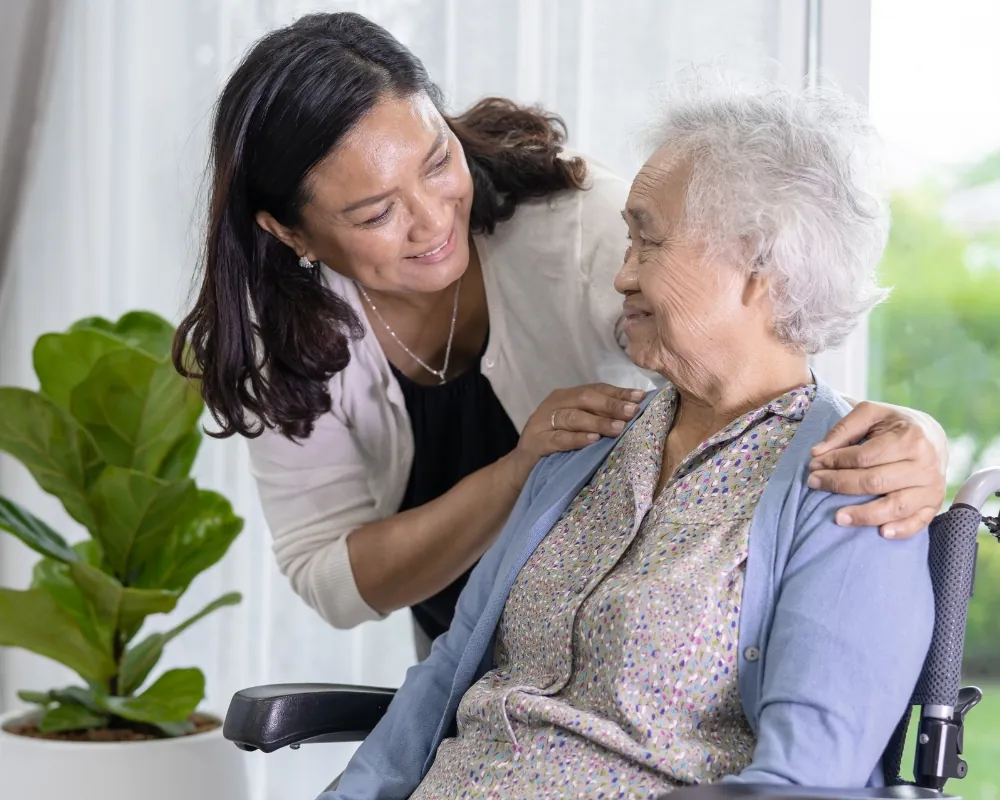

Caregiver comforting elderly woman in wheelchair
Male caregiver and senior man on porch
Companion caregiver talking with elderly woman
Caregiver comforting elderly woman in wheelchair
Male caregiver and senior man on porch
Companion caregiver talking with elderly woman

Parkinson’s & Neurological Home Care in Montgomery County, MD

There’s often a slow realization with Parkinson’s — a hand that shakes when it didn’t used to, a step that hesitates before it moves, handwriting that’s gotten smaller and harder to read. Sometimes it’s a formal diagnosis already in hand. Sometimes it’s a family still watching and wondering.

Advanced Nursing & Home Care provides personal care and skilled nursing for people living with Parkinson’s disease and other neurological conditions, from help with daily routines to precise medication timing and clinical support.

This guide can help you understand how Parkinson’s tends to affect daily life, what safe support at home can look like as needs change, and when it’s time for clinical involvement rather than daily assistance alone.

This page is not a substitute for medical diagnosis or treatment. If you’re noticing new tremor, balance, or mobility changes, a physician or neurologist can help evaluate what may be causing them.

When Families Usually Call Us

Some slowing down is a normal part of aging. Parkinson’s disease and related neurological conditions are different — they involve specific, progressive changes to movement and coordination that don’t resolve on their own.

A few signs that tend to point toward something more than typical aging:

  • Tremor, most often starting in one hand, that’s present even at rest
  • Stiffness or rigidity in the arms, legs, or trunk
  • Slower movement overall, or a “freezing” feeling when starting to walk
  • Smaller handwriting, a softer voice, or a less expressive face
  • Balance changes, or an increase in near-falls or actual falls

None of these alone means something is seriously wrong. Together, and worsening over time, they’re worth raising with a doctor — and worth thinking through what kind of support might help at home.

An estimated 1.1 million Americans are currently living with Parkinson’s disease, with nearly 90,000 new diagnoses each year, according to the Parkinson’s Foundation.

How Parkinson’s Needs Can Change Over Time

Parkinson’s doesn’t move through the same predictable stages that dementia does — it progresses at very different rates for different people, and it isn’t strictly linear. Good days and hard days can vary within the same week. Instead of stages, it’s more useful to think in terms of what tends to change:

Mobility & balance. Fall risk tends to increase over time, particularly with “freezing” episodes (a sudden inability to take the next step) and difficulty with turns or transfers. This is often the first area where families start looking for support.

Medication timing. Parkinson’s medications, particularly levodopa, are highly time-sensitive — taken even 30–60 minutes late, symptoms can return sharply until the next dose takes effect. Precise medication timing becomes one of the most important, and most demanding, parts of daily care.

Non-motor changes. Sleep disruption, mood changes, and — for some — cognitive changes can accompany the more visible movement symptoms, and often need just as much attention as tremor or stiffness.

When clinical involvement increases. As symptoms progress, families often move from primarily non-medical support (safety, routines, companionship) toward needing licensed nursing involvement — precise medication administration, swallowing safety, or coordination with a neurologist’s care plan. Our skilled nursing care team  — which also supports clients managing ALS, MS, and other complex neurological needs — is built for exactly that crossover point.

Because the pace and pattern of Parkinson’s varies so much person to person, an in-home assessment matters more here than almost anywhere else — what your loved one needs this month may look different in six months.

Caregiver showing tablet to senior woman
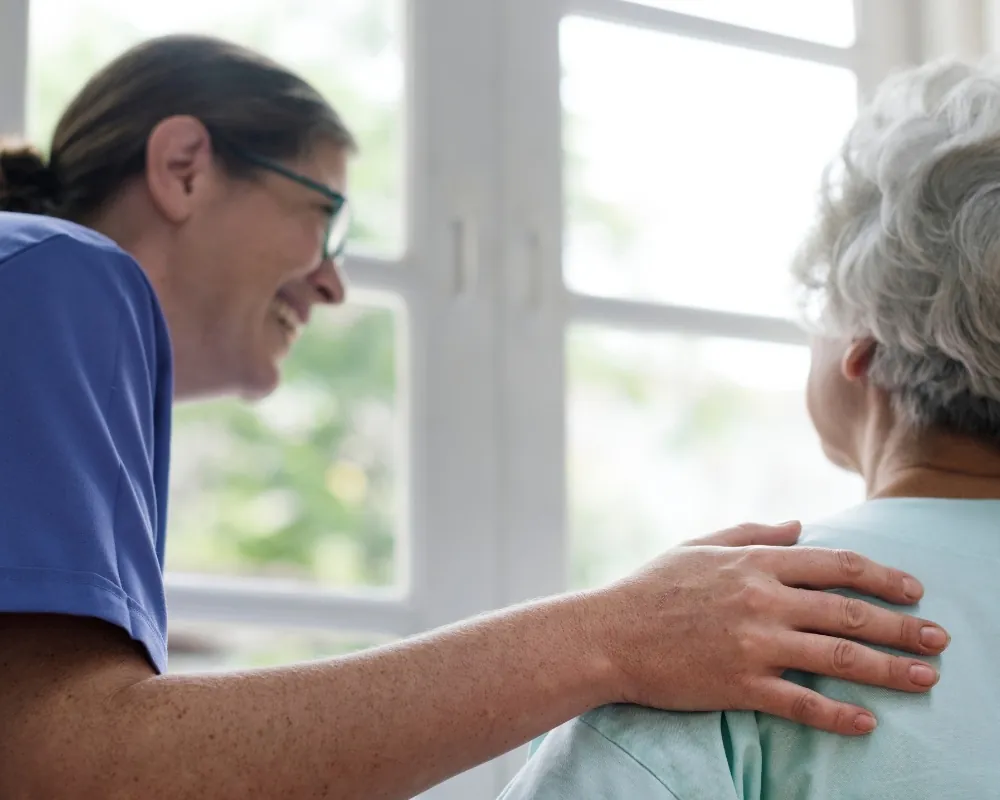
Home care nurse laughing with senior man
Caregiver embracing senior woman at home

When It May Be Time to Consider In-Home Parkinson’s Care

It may be time to consider support at home when falls or near-falls are becoming more frequent, when medication timing has become difficult for family members to manage consistently, when freezing episodes are creating real safety risk, or when a caregiver is stretched too thin to keep up safely.

You don’t need a formal disability determination or a specific symptom checklist before reaching out. If daily routines, safety, or medication timing have become harder to manage, that’s reason enough to talk it through.

How Parkinson’s Needs Can Change Over Time

Parkinson’s doesn’t move through the same predictable stages that dementia does — it progresses at very different rates for different people, and it isn’t strictly linear. Good days and hard days can vary within the same week. Instead of stages, it’s more useful to think in terms of what tends to change:

Mobility & balance. Fall risk tends to increase over time, particularly with “freezing” episodes (a sudden inability to take the next step) and difficulty with turns or transfers. This is often the first area where families start looking for support.

Medication timing. Parkinson’s medications, particularly levodopa, are highly time-sensitive — taken even 30–60 minutes late, symptoms can return sharply until the next dose takes effect. Precise medication timing becomes one of the most important, and most demanding, parts of daily care.

Non-motor changes. Sleep disruption, mood changes, and — for some — cognitive changes can accompany the more visible movement symptoms, and often need just as much attention as tremor or stiffness.

When clinical involvement increases. As symptoms progress, families often move from primarily non-medical support (safety, routines, companionship) toward needing licensed nursing involvement — precise medication administration, swallowing safety, or coordination with a neurologist’s care plan. Our skilled nursing care team  — which also supports clients managing ALS, MS, and other complex neurological needs — is built for exactly that crossover point.

Because the pace and pattern of Parkinson’s varies so much person to person, an in-home assessment matters more here than almost anywhere else — what your loved one needs this month may look different in six months.

Caregiver showing tablet to senior woman
Home care nurse laughing with senior man
Caregiver embracing senior woman at home

When It May Be Time to Consider In-Home Parkinson’s Care

It may be time to consider support at home when falls or near-falls are becoming more frequent, when medication timing has become difficult for family members to manage consistently, when freezing episodes are creating real safety risk, or when a caregiver is stretched too thin to keep up safely.

You don’t need a formal disability determination or a specific symptom checklist before reaching out. If daily routines, safety, or medication timing have become harder to manage, that’s reason enough to talk it through.

If medication timing, fall risk, or keeping up with day-to-day changes is starting to feel like more than you can manage alone, we’re happy to talk it through — no pressure, just a conversation about what support could look like right now.

What Safe In-Home Parkinson’s Care Can Include

Safe in-home Parkinson’s care is built around fall prevention, precise routines, and the flexibility to add clinical support as needs change. In practice, it usually includes:

  • Fall and mobility support — assistance with transfers, walking, and safe movement through the home, along with home safety adjustments that reduce fall risk
  • Medication timing support — help keeping levodopa and other medications on a precise schedule, with licensed nursing oversight added when clinical medication management is needed
  • Freezing-episode awareness — care providers trained to recognize and safely help with freezing or balance episodes as they happen, not just after a fall
  • Personal care support — bathing, dressing, and daily hygiene, handled by care providers trained to work at the pace Parkinson’s requires, without rushing
  • Nighttime support — help with nighttime mobility, medication timing, or restlessness, with overnight care added when needed
  • Family communication — regular updates on mobility, medication response, and any new symptoms worth flagging to a neurologist

Personal Care, Skilled Nursing, or Both? How to Think About the Crossover

As Parkinson’s progresses, families often find that care needs do not fit neatly into one category. A loved one may need help getting dressed, moving safely through the house, or preparing meals, while also needing closer attention to medication timing, swallowing changes, fall risk, or new symptoms.

That is why Parkinson’s care at home often works best when personal care and skilled nursing are considered together. The question is not always “which one do we need forever?” It is usually, “what kind of support is needed right now, and what might need to change over time?”

Help with dressing, meals, transfers, and supervision is personal care. Precise medication administration, swallowing assessments, or coordination with a neurologist’s treatment plan should involve skilled nursing.

If missed or mistimed doses are causing noticeable symptom changes, it may be time to bring in licensed nursing in-home oversight instead of relying on reminders alone.

Swallowing difficulty, significant cognitive change, or other complications may mean skilled nursing should be involved, often alongside — not instead of — personal care.

Many families start with personal care and add skilled nursing later, or use both together. The goal is one coordinated care plan that can adjust as needs shift, rather than forcing the family to start over with a different provider.

What Safe In-Home Parkinson’s Care Can Include

Safe in-home Parkinson’s care is built around fall prevention, precise routines, and the flexibility to add clinical support as needs change. In practice, it usually includes:

  • Fall and mobility support — assistance with transfers, walking, and safe movement through the home, along with home safety adjustments that reduce fall risk
  • Medication timing support — help keeping levodopa and other medications on a precise schedule, with licensed nursing oversight added when clinical medication management is needed
  • Freezing-episode awareness — care providers trained to recognize and safely help with freezing or balance episodes as they happen, not just after a fall
  • Personal care support — bathing, dressing, and daily hygiene, handled by care providers trained to work at the pace Parkinson’s requires, without rushing
  • Nighttime support — help with nighttime mobility, medication timing, or restlessness, with overnight care added when needed
  • Family communication — regular updates on mobility, medication response, and any new symptoms worth flagging to a neurologist

Personal Care, Skilled Nursing, or Both? How to Think About the Crossover

As Parkinson’s progresses, families often find that care needs do not fit neatly into one category. A loved one may need help getting dressed, moving safely through the house, or preparing meals, while also needing closer attention to medication timing, swallowing changes, fall risk, or new symptoms.

That is why Parkinson’s care at home often works best when personal care and skilled nursing are considered together. The question is not always “which one do we need forever?” It is usually, “what kind of support is needed right now, and what might need to change over time?”

Help with dressing, meals, transfers, and supervision is personal care. Precise medication administration, swallowing assessments, or coordination with a neurologist’s treatment plan should involve skilled nursing.

If missed or mistimed doses are causing noticeable symptom changes, it may be time to bring in licensed nursing in-home oversight instead of relying on reminders alone.

Swallowing difficulty, significant cognitive change, or other complications may mean skilled nursing should be involved, often alongside — not instead of — personal care.

Many families start with personal care and add skilled nursing later, or use both together. The goal is one coordinated care plan that can adjust as needs shift, rather than forcing the family to start over with a different provider.

Parkinson’s & Neurological Care Close to Home, Throughout Montgomery County

If you’re looking for in-home care for a Parkinson’s or neurological condition in Bethesda, Chevy Chase, Gaithersburg, Potomac, Rockville, Silver Spring, or another Montgomery County community, our care team can help you understand what support may be available.

You Don’t Have to Sort Through This Alone

If you’re still not sure whether your loved one needs personal care, skilled nursing, or a mix of both, that’s exactly the kind of question worth a phone call rather than a guess. Tell us what’s changed — new symptoms, medication timing that’s gotten harder to manage, more falls — and we’ll help you understand what a realistic care plan looks like, starting from where you are today.

Planning ahead often allows families to keep loved ones safer at home while adapting care as Parkinson’s changes over time.

Adult son with senior father looking at photo
Caregiver arm around senior woman outside
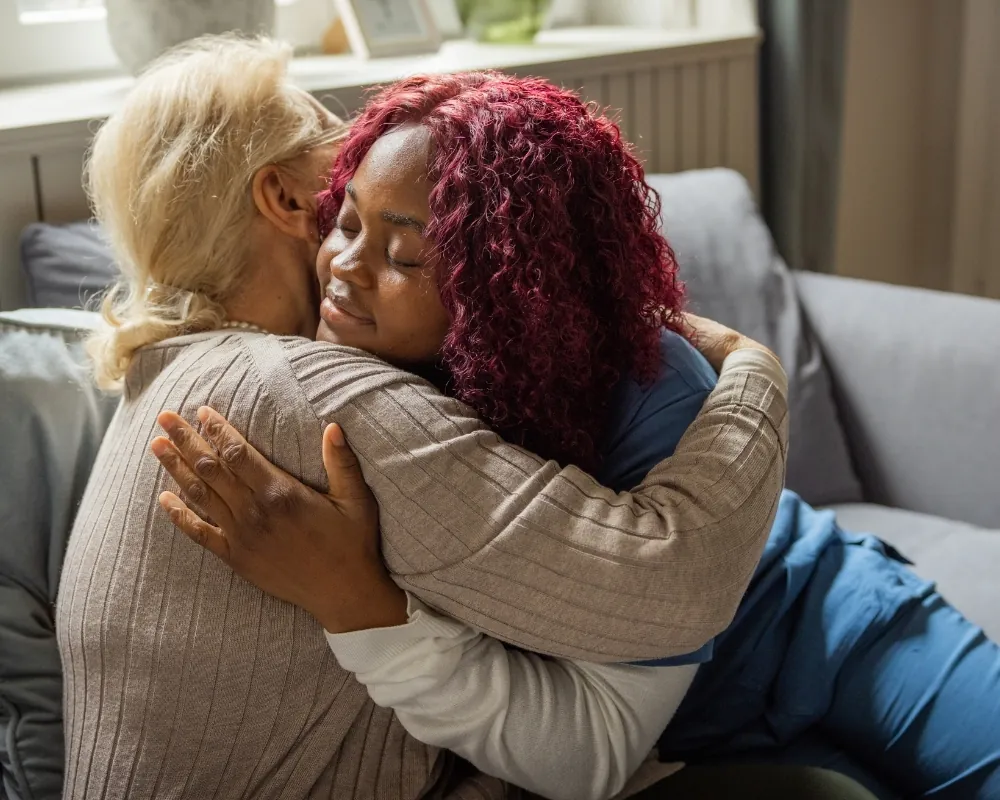
Caregiver comforting senior woman
Adult son with senior father looking at photo
Caregiver arm around senior woman outside
Caregiver comforting senior woman

You Don’t Have to Sort Through This Alone

If you’re still not sure whether your loved one needs personal care, skilled nursing, or a mix of both, that’s exactly the kind of question worth a phone call rather than a guess. Tell us what’s changed — new symptoms, medication timing that’s gotten harder to manage, more falls — and we’ll help you understand what a realistic care plan looks like, starting from where you are today.

Planning ahead often allows families to keep loved ones safer at home while adapting care as Parkinson’s changes over time.

What Families In Montgomery County Say.

The Right Care For Where Your Family Is Right Now.

Every family’s situation is different. Our services are designed to adapt as needs change.

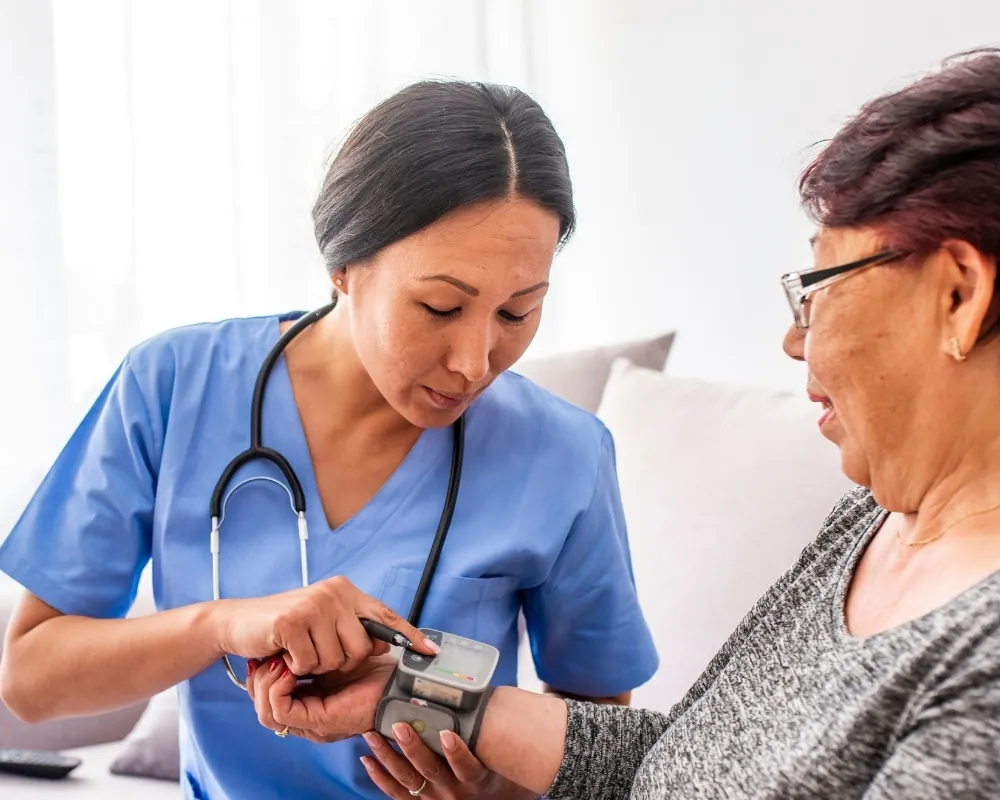
Nurse checking senior woman's blood pressure

The Right Care For Where Your Family Is Right Now.

Every family’s situation is different. Our services are designed to adapt as needs change.

Specialized Care For Complex Conditions

Frequently Asked Questions

Essential tremor typically affects the hands during movement and doesn’t usually involve the other symptoms of Parkinson’s. Parkinson’s tremor is more often present at rest and tends to come with rigidity, slowed movement, or balance changes. A neurologist can help distinguish between the two.

Clinicians often describe Parkinson’s progression with the Hoehn and Yahr scale, from mild symptoms on one side of the body to significant balance and mobility involvement. Unlike dementia, Parkinson’s progresses at very different rates and isn’t strictly linear. Only a doctor can diagnose or stage Parkinson’s, but we can talk through what current symptoms mean for care.

Many Parkinson’s medications, especially levodopa, work on a narrow window. If a dose is taken even 30 to 60 minutes late, stiffness and slowed movement can return before the next dose takes effect. Consistent, on-time dosing is one of the most important things a care team can help manage.

It depends on what’s needed right now. Personal care includes help with dressing, meals, transfers, and supervision. Precise medication administration, swallowing concerns, or coordination with a neurologist’s plan should involve skilled nursing. Many families start with personal care and add skilled nursing later, within one coordinated plan.

skilled nursing care >

Advanced Nursing & Home Care is the first Parkinson’s Foundation Community Partner in Parkinson’s Care in Maryland. Through the program, our team has access to Parkinson’s-specific education, training, and resources on medication timing, mobility, communication, and the day-to-day challenges of living with Parkinson’s.

Parkinson’s Foundation Community Partner >

Ready for Parkinson’s & Neurological Home Care in Montgomery County, MD

Content Reviewed by Linda Lennon, BSN, RN, Director of Nursing at Advanced Nursing and Home Care