Stroke Home Care & Recovery Support in Montgomery County, MD

A stroke happens in minutes. Recovery happens over weeks and months — and most of it happens at home.

The hospital stay ends. Inpatient rehab may end. And the family is left with a new daily reality: a parent who needs help getting up from a chair, a spouse whose words don’t come as easily as they used to, a loved one who is worn out halfway through getting dressed. And the family may be left wondering whether a new symptom is part of recovery — or something the doctor needs to hear about today.

Stroke is a leading cause of serious long-term disability in the United States, according to the Centers for Disease Control and Prevention. Its effects vary widely. One person may have weakness on one side of the body. Another may have trouble swallowing, speaking, remembering, or managing emotions. Many have some combination. But families often face the same challenge at home: a recovery plan that depends on consistent daily effort, careful observation, and more hands than one family can realistically provide alone.
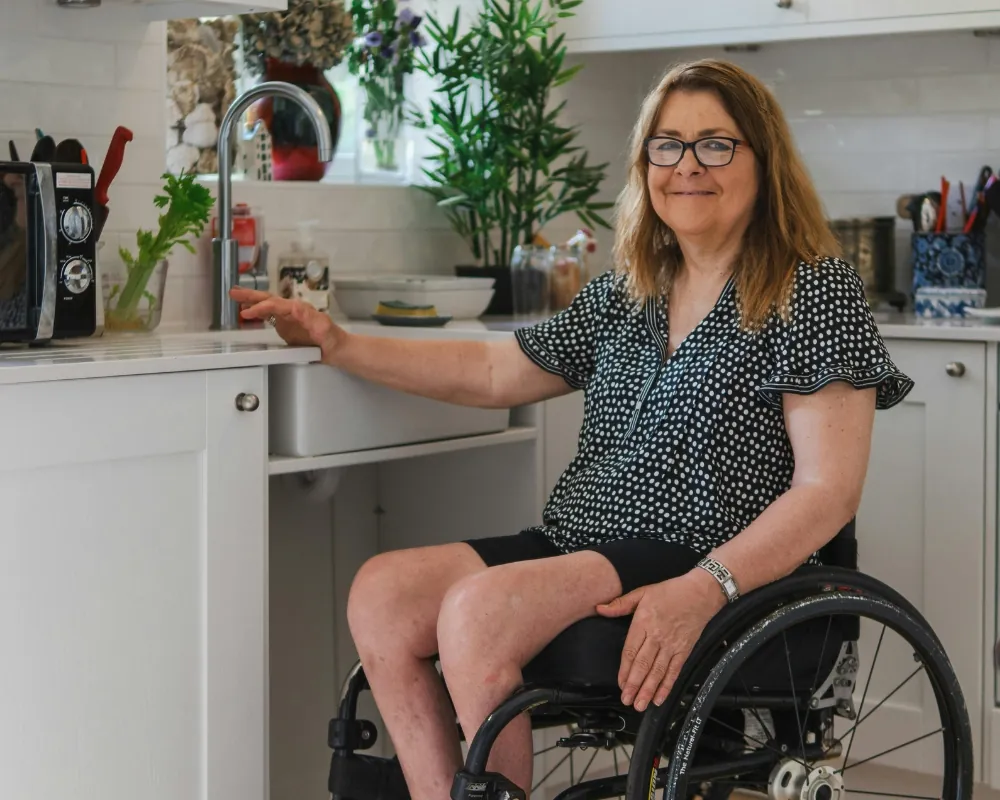
Woman using wheelchair in accessible kitchen
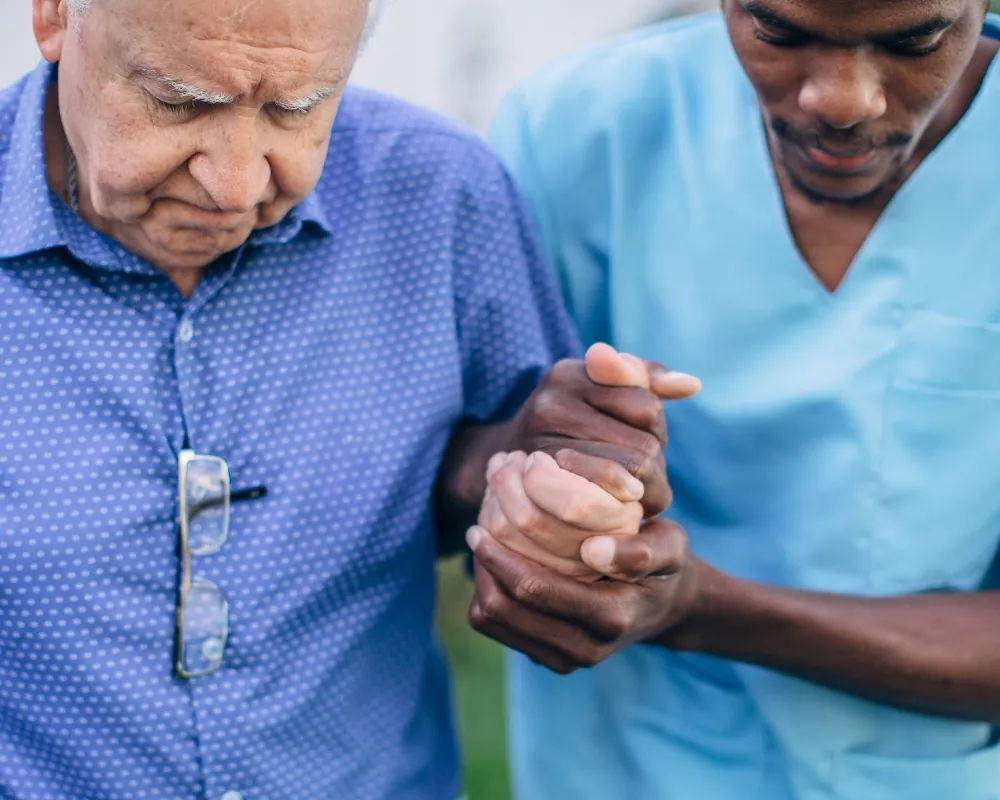
Caregiver holding hands with senior for mobility support
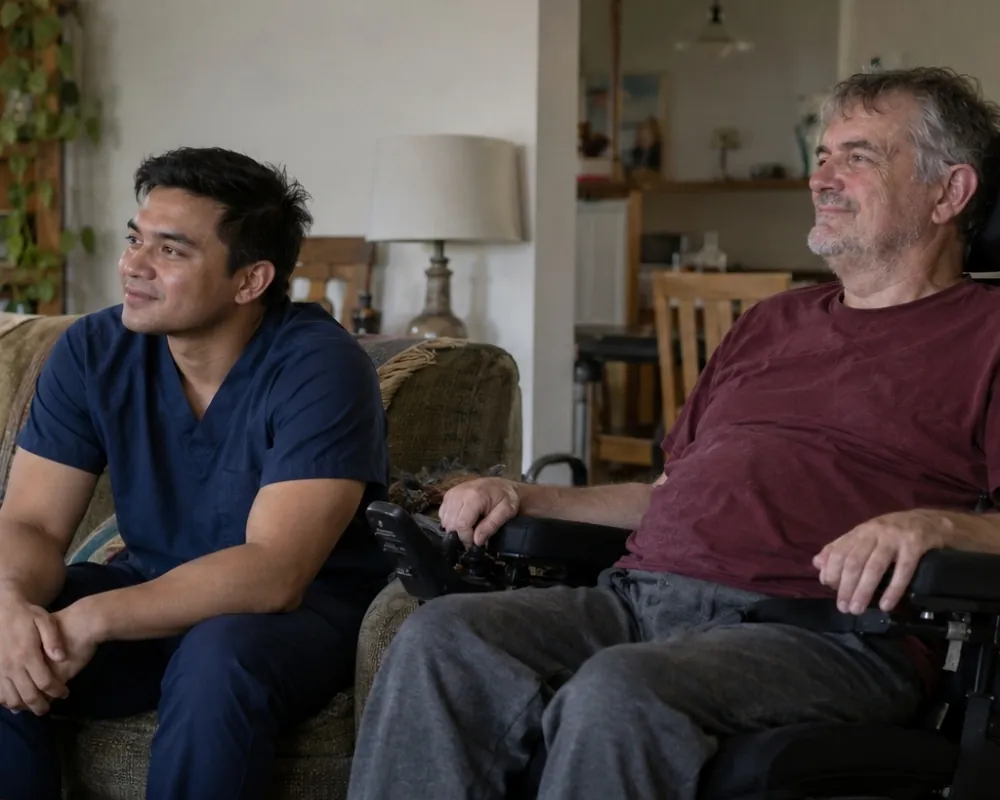
Male caregiver on a companion visit with senior man
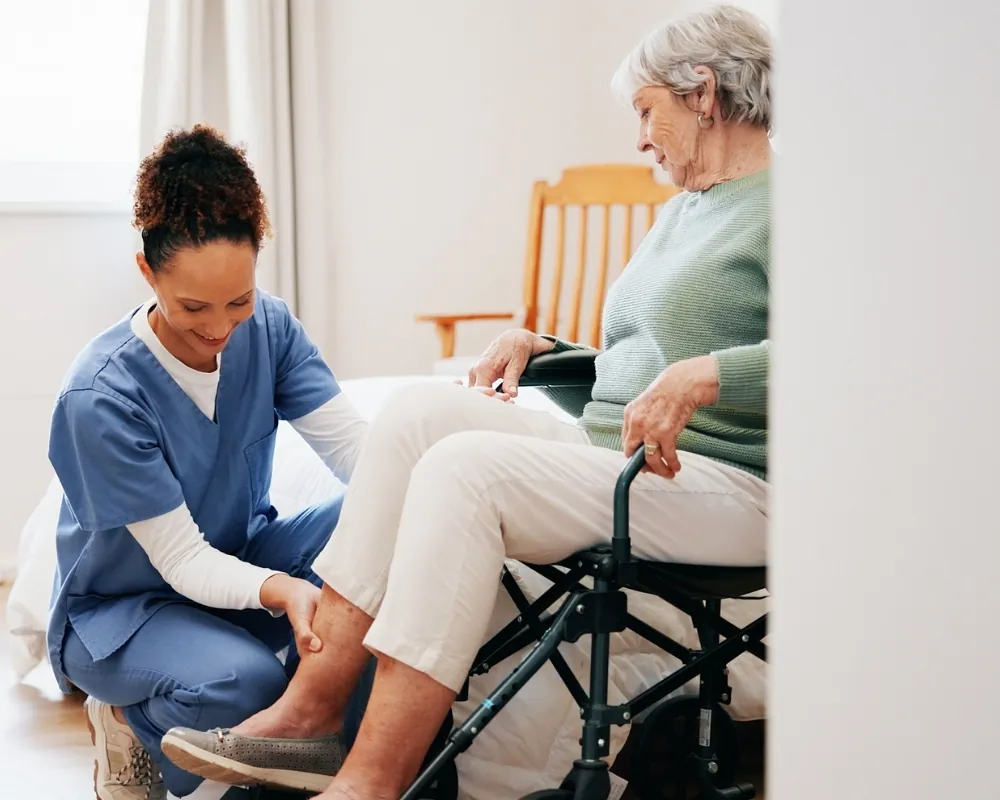
Caregiver helping senior woman in wheelchair
Woman using wheelchair in accessible kitchen
Caregiver holding hands with senior for mobility support
Male caregiver on a companion visit with senior man
Caregiver helping senior woman in wheelchair

Stroke Home Care & Recovery Support in Montgomery County, MD

A stroke happens in minutes. Recovery happens over weeks and months — and most of it happens at home.

The hospital stay ends. Inpatient rehab may end. And the family is left with a new daily reality: a parent who needs help getting up from a chair, a spouse whose words don’t come as easily as they used to, a loved one who is worn out halfway through getting dressed. And the family may be left wondering whether a new symptom is part of recovery — or something the doctor needs to hear about today.

Stroke is a leading cause of serious long-term disability in the United States, according to the Centers for Disease Control and Prevention. Its effects vary widely. One person may have weakness on one side of the body. Another may have trouble swallowing, speaking, remembering, or managing emotions. Many have some combination. But families often face the same challenge at home: a recovery plan that depends on consistent daily effort, careful observation, and more hands than one family can realistically provide alone.
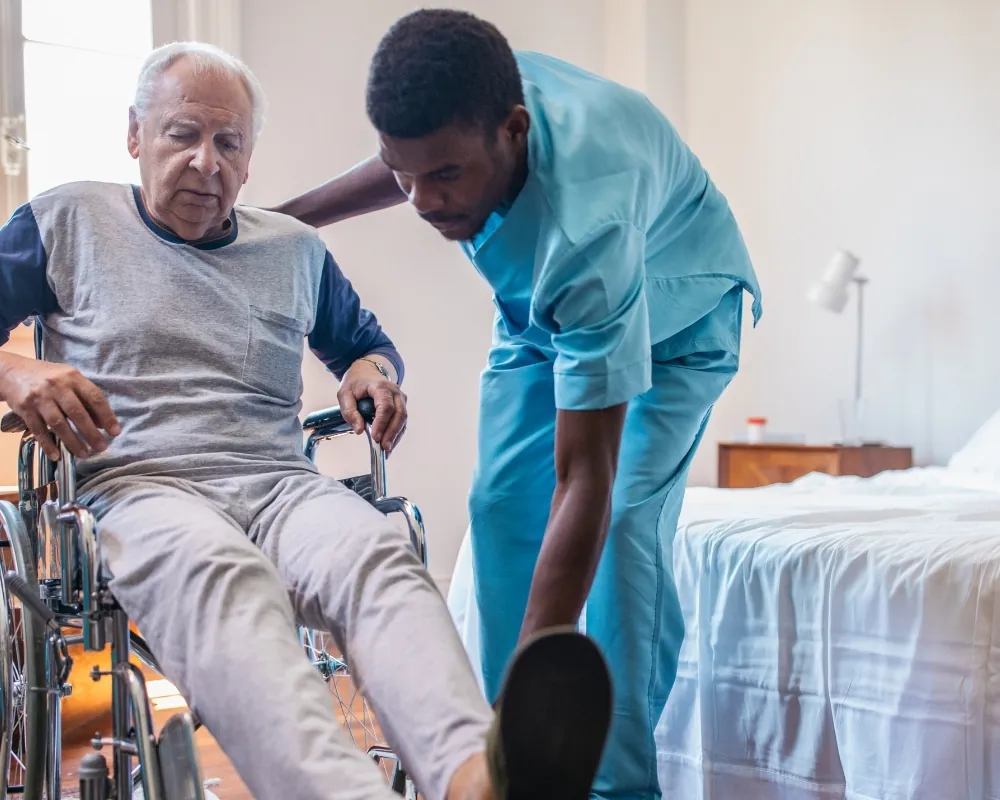
Caregiver helping senior man in wheelchair in bedroom
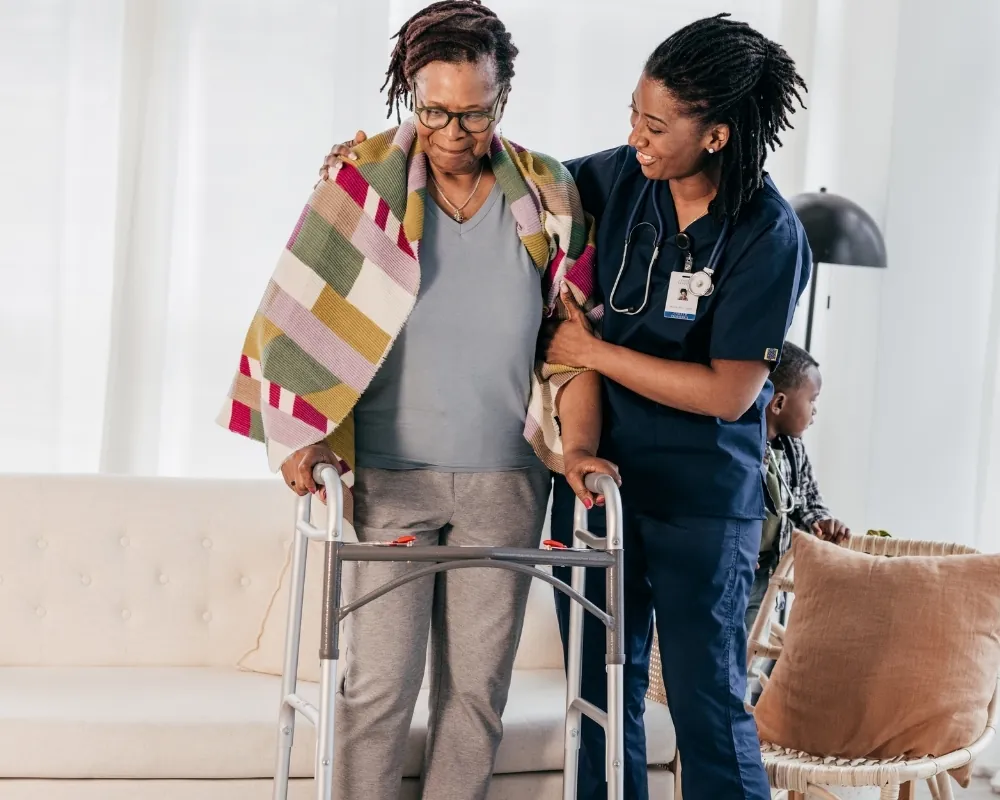
Caregiver helping senior woman with walker

Stroke recovery also does not always fit neatly into one type of care. Someone may need hands-on help with bathing, transfers, meals, and mobility while also needing a licensed nurse for medication administration, wound care, clinical monitoring, or another nursing need. Advanced Nursing & Home Care provides both personal care and skilled nursing, allowing support to change as recovery changes.

Our Hospital Discharge Support page explains how we help families through the move from hospital or rehab to home. Our Skilled Nursing Care page explains the clinical services our nurses can provide.

This page provides general information and is not a substitute for medical advice. Follow the care plan your loved one’s physician and therapists provide, and contact the appropriate medical provider with questions about medications, blood pressure, swallowing, therapy exercises, mobility, or other changes. Call 911 immediately if you notice any sign of a new stroke or another emergency.

Caregiver helping senior man in wheelchair in bedroom
Caregiver helping senior woman with walker

Stroke recovery also does not always fit neatly into one type of care. Someone may need hands-on help with bathing, transfers, meals, and mobility while also needing a licensed nurse for medication administration, wound care, clinical monitoring, or another nursing need. Advanced Nursing & Home Care provides both personal care and skilled nursing, allowing support to change as recovery changes.

Our Hospital Discharge Support page explains how we help families through the move from hospital or rehab to home. Our Skilled Nursing Care page explains the clinical services our nurses can provide.

This page provides general information and is not a substitute for medical advice. Follow the care plan your loved one’s physician and therapists provide, and contact the appropriate medical provider with questions about medications, blood pressure, swallowing, therapy exercises, mobility, or other changes. Call 911 immediately if you notice any sign of a new stroke or another emergency.

When Stroke Survivors May Need Home Care

Coming home after a stroke is a milestone. It is also when much of the day-to-day work of recovery shifts from a hospital or rehabilitation team to the person and family.

Families may be coordinating medications, therapy appointments, home exercises, meals, personal care, and safety around the house, often while still absorbing what happened. As the weeks go on, or as the family caregiver becomes tired, the routine may become harder to maintain.

It may be time to reassess the support at home when:

  • Your loved one needs help getting in and out of bed, a chair, the shower, or the car
  • Walking, balance, or weakness on one side has led to falls or near-falls
  • Meals take a long time, or coughing and choking during eating have become a concern
  • Speech or communication changes make it hard to know what your loved one needs
  • Medications, especially new ones started after the stroke, have become difficult to keep straight
  • Therapy appointments or home exercise routines are being missed
  • Memory, confusion, or mood changes are affecting the daily routine
  • Fatigue is limiting how much of the day your loved one can manage
  • A family caregiver is providing hands-on help alone, day and night
  • The person is spending long periods alone despite needing supervision or assistance

One sign by itself does not necessarily mean something is wrong. But when the routine becomes harder to maintain, changes happen more often, or the family no longer feels confident managing recovery at home, it is worth talking with the medical team and reassessing what help is needed.

Stroke Home Care After Hospital or Rehab Discharge

The transition home is often when families discover the difference between what someone can do during a therapy session and what it takes to manage an entire day at home.

A person may be able to walk a short distance with a therapist but still need help getting safely to the bathroom at night. They may be able to dress with assistance but become too fatigued to prepare a meal afterward. A spouse may learn how to help with a transfer in rehab, then realize that doing it alone several times every day is another matter.

Before discharge, it can help to understand:

  • Who will help with bathing, dressing, toileting, and transfers
  • Whether the person can safely be left alone
  • Who will prepare meals and follow any swallowing or dietary instructions
  • How medications will be managed
  • How the person will get to follow-up and therapy appointments
  • Who will help carry out routines recommended by physical, occupational, or speech therapy
  • Whether any needs require a licensed nurse
  • What support will be available during evenings or overnight
  • Which changes should be reported to the medical team
  • What the family can realistically manage every day

Advanced Nursing & Home Care can work from the discharge plan to help determine whether personal care, skilled nursing, or a combination of both may be appropriate once your loved one is home.

When Stroke Survivors May Need Home Care

Coming home after a stroke is a milestone. It is also when much of the day-to-day work of recovery shifts from a hospital or rehabilitation team to the person and family.

Families may be coordinating medications, therapy appointments, home exercises, meals, personal care, and safety around the house, often while still absorbing what happened. As the weeks go on, or as the family caregiver becomes tired, the routine may become harder to maintain.

It may be time to reassess the support at home when:

  • Your loved one needs help getting in and out of bed, a chair, the shower, or the car
  • Walking, balance, or weakness on one side has led to falls or near-falls
  • Meals take a long time, or coughing and choking during eating have become a concern
  • Speech or communication changes make it hard to know what your loved one needs
  • Medications, especially new ones started after the stroke, have become difficult to keep straight
  • Therapy appointments or home exercise routines are being missed
  • Memory, confusion, or mood changes are affecting the daily routine
  • Fatigue is limiting how much of the day your loved one can manage
  • A family caregiver is providing hands-on help alone, day and night
  • The person is spending long periods alone despite needing supervision or assistance

One sign by itself does not necessarily mean something is wrong. But when the routine becomes harder to maintain, changes happen more often, or the family no longer feels confident managing recovery at home, it is worth talking with the medical team and reassessing what help is needed.

Stroke Home Care After Hospital or Rehab Discharge

The transition home is often when families discover the difference between what someone can do during a therapy session and what it takes to manage an entire day at home.

A person may be able to walk a short distance with a therapist but still need help getting safely to the bathroom at night. They may be able to dress with assistance but become too fatigued to prepare a meal afterward. A spouse may learn how to help with a transfer in rehab, then realize that doing it alone several times every day is another matter.

Before discharge, it can help to understand:

  • Who will help with bathing, dressing, toileting, and transfers
  • Whether the person can safely be left alone
  • Who will prepare meals and follow any swallowing or dietary instructions
  • How medications will be managed
  • How the person will get to follow-up and therapy appointments
  • Who will help carry out routines recommended by physical, occupational, or speech therapy
  • Whether any needs require a licensed nurse
  • What support will be available during evenings or overnight
  • Which changes should be reported to the medical team
  • What the family can realistically manage every day

Advanced Nursing & Home Care can work from the discharge plan to help determine whether personal care, skilled nursing, or a combination of both may be appropriate once your loved one is home.

Is your loved one coming home after a stroke — or has recovery at home become more than your family can manage on its own?

Tell us what has changed. We can help you sort through what needs may be supported through personal care, what may require a licensed nurse, and what questions to bring to your loved one’s medical team.

How Care Needs Can Differ After a Stroke

No two strokes affect a person in exactly the same way. The effects depend on which part of the brain was affected, how severe the stroke was, and the person’s health before it happened.

The physician’s care plan and the therapy team’s instructions should always guide recovery. Support at home can help a person follow that plan more consistently, manage daily activities safely, and communicate changes to the appropriate provider.

For someone with weakness or balance changes after a stroke, in-home support usually centers on moving safely through the day — getting up, bathing, dressing, and walking — without undoing the progress made in rehab.

Weakness or paralysis on one side of the body is one of the most common effects of stroke, according to the National Institute of Neurological Disorders and Stroke. Combined with balance changes, fatigue, or changes in how the person perceives one side of their body, ordinary movement can carry a real risk of falling.

Depending on the care plan, support at home may include:

  • Help with transfers into and out of bed, chairs, the shower, and the car
  • Standby assistance while walking or using a walker, cane, or wheelchair
  • Help with bathing, dressing, grooming, and toileting
  • Fall-prevention routines and attention to hazards around the home
  • Encouragement to follow the mobility routines set by the physical or occupational therapist
  • Observation and reporting of changes identified in the care plan
  • Skilled nursing when clinical assessment or another nursing task is required

A care provider does not replace the therapy team. The goal is to make the plan they set easier to carry out every day — not just on therapy days.

For someone whose swallowing has been affected by a stroke, in-home support usually means making sure every meal follows the instructions the speech-language pathologist or physician has set — the right food textures, the right liquid consistency, the right positioning, the right pace.

Swallowing difficulty is common after a stroke. It can make eating slow and tiring, and it can raise the risk of choking or of food and liquid entering the airway. The medical team should tell the family exactly which precautions apply and which changes to report.

Depending on the care plan, support at home may include:

  • Meal preparation that follows the prescribed diet and food or liquid consistency
  • Help with positioning and pacing during meals
  • Supervision during eating and drinking
  • Help maintaining regular meals and hydration
  • Observation and reporting of coughing, choking, or other changes identified in the care plan
  • Skilled nursing when clinical monitoring or another ordered nursing task is involved

Decisions about diet textures, liquid consistency, and swallowing precautions belong with the treating provider and the speech-language pathologist.

For someone living with speech or language changes after a stroke, in-home support usually focuses on patience, consistency, and giving the person time and room to be understood.

A stroke can affect the ability to speak, find words, understand others, read, or write — a condition called aphasia, according to the NATIONAL APHASIA ASSOCIATION. Some people also have slurred speech from weakness in the muscles used for talking. Communication changes can be deeply frustrating for the person and for the people who love them.

Depending on the care plan, stroke recovery support at home may include:

  • Companionship and conversation at a pace that works for the person
  • Help using communication strategies or tools recommended by the speech therapist
  • Encouragement to practice speech exercises as directed
  • Help communicating needs, preferences, and discomfort to family and providers
  • Observation and reporting of changes identified in the care plan

The speech-language pathologist should direct communication exercises and strategies. Support at home helps keep that practice consistent between sessions.

For someone experiencing cognitive or emotional changes after a stroke, in-home support usually means a steady, predictable routine and someone paying attention to how the person is really doing — not just physically.

A stroke can affect memory, attention, judgment, and problem-solving. It can also change how a person experiences and expresses emotion. Depression is common after a stroke, according to the (EXTERNAL LINK → American Stroke Association | https://www.stroke.org/en/about-stroke/effects-of-stroke), and it can affect motivation, sleep, appetite, and participation in recovery. These changes are worth raising with the medical team, not simply waiting them out.

Depending on the care plan, support at home may include:

  • Help following a consistent daily routine
  • Medication reminders within the caregiver’s permitted role
  • Supervision for safety when judgment or memory has been affected
  • Companionship and engagement throughout the day
  • Help keeping track of appointments and instructions
  • Observation and reporting of mood, behavior, or cognitive changes identified in the care plan

When memory changes are significant or progressing, our Memory Care page explains how we support families living with cognitive decline.

For someone whose energy has been affected by a stroke, in-home support usually means pacing the day so the most important things — therapy exercises, meals, personal care — can get done without leaving the person too exhausted to do anything else.

Fatigue after a stroke can be significant and can last well beyond the hospital stay. Recovery also rarely moves in a straight line. There may be weeks of steady progress followed by plateaus or harder days.

Depending on the care plan, support at home may include:

  • Help planning the day around energy levels and rest breaks
  • Assistance with tasks that would otherwise use up limited energy
  • Encouragement to keep up with therapy routines at a realistic pace
  • Help getting to and from medical and therapy appointments
  • Observation and reporting of changes identified in the care plan

Questions about how recovery is progressing and what to expect next belong with the physician and therapy team.

How Home Care Supports Stroke Recovery Between Therapy Visits

Physical, occupational, and speech therapy may be important parts of stroke recovery, but therapists are not in the home throughout the day.

The routines they establish still have to fit into everyday life: getting out of bed, bathing, preparing meals, moving safely through the house, practicing recommended exercises, getting to appointments, and managing fatigue.

Home care does not replace physical, occupational, or speech therapy. A care provider can help the person follow routines and strategies that the therapy team has already established.

Depending on the care plan, that may include:

  • Encouraging home exercises as directed by the therapist
  • Using mobility or communication strategies recommended by the therapy team
  • Helping the person prepare for and get to therapy appointments
  • Providing assistance with everyday activities between therapy visits
  • Helping pace the day so fatigue does not consume the energy needed for therapy and other important activities
  • Observing and reporting changes according to the care plan

The therapy team determines the rehabilitation plan. Support at home helps make that plan easier to carry out during the rest of the week.

How Care Needs Can Differ After a Stroke

No two strokes affect a person in exactly the same way. The effects depend on which part of the brain was affected, how severe the stroke was, and the person’s health before it happened.

The physician’s care plan and the therapy team’s instructions should always guide recovery. Support at home can help a person follow that plan more consistently, manage daily activities safely, and communicate changes to the appropriate provider.

For someone with weakness or balance changes after a stroke, in-home support usually centers on moving safely through the day — getting up, bathing, dressing, and walking — without undoing the progress made in rehab.

Weakness or paralysis on one side of the body is one of the most common effects of stroke, according to the National Institute of Neurological Disorders and Stroke. Combined with balance changes, fatigue, or changes in how the person perceives one side of their body, ordinary movement can carry a real risk of falling.

Depending on the care plan, support at home may include:

  • Help with transfers into and out of bed, chairs, the shower, and the car
  • Standby assistance while walking or using a walker, cane, or wheelchair
  • Help with bathing, dressing, grooming, and toileting
  • Fall-prevention routines and attention to hazards around the home
  • Encouragement to follow the mobility routines set by the physical or occupational therapist
  • Observation and reporting of changes identified in the care plan
  • Skilled nursing when clinical assessment or another nursing task is required

A care provider does not replace the therapy team. The goal is to make the plan they set easier to carry out every day — not just on therapy days.

For someone whose swallowing has been affected by a stroke, in-home support usually means making sure every meal follows the instructions the speech-language pathologist or physician has set — the right food textures, the right liquid consistency, the right positioning, the right pace.

Swallowing difficulty is common after a stroke. It can make eating slow and tiring, and it can raise the risk of choking or of food and liquid entering the airway. The medical team should tell the family exactly which precautions apply and which changes to report.

Depending on the care plan, support at home may include:

  • Meal preparation that follows the prescribed diet and food or liquid consistency
  • Help with positioning and pacing during meals
  • Supervision during eating and drinking
  • Help maintaining regular meals and hydration
  • Observation and reporting of coughing, choking, or other changes identified in the care plan
  • Skilled nursing when clinical monitoring or another ordered nursing task is involved

Decisions about diet textures, liquid consistency, and swallowing precautions belong with the treating provider and the speech-language pathologist.

For someone living with speech or language changes after a stroke, in-home support usually focuses on patience, consistency, and giving the person time and room to be understood.

A stroke can affect the ability to speak, find words, understand others, read, or write — a condition called aphasia, according to the NATIONAL APHASIA ASSOCIATION. Some people also have slurred speech from weakness in the muscles used for talking. Communication changes can be deeply frustrating for the person and for the people who love them.

Depending on the care plan, stroke recovery support at home may include:

  • Companionship and conversation at a pace that works for the person
  • Help using communication strategies or tools recommended by the speech therapist
  • Encouragement to practice speech exercises as directed
  • Help communicating needs, preferences, and discomfort to family and providers
  • Observation and reporting of changes identified in the care plan

The speech-language pathologist should direct communication exercises and strategies. Support at home helps keep that practice consistent between sessions.

For someone experiencing cognitive or emotional changes after a stroke, in-home support usually means a steady, predictable routine and someone paying attention to how the person is really doing — not just physically.

A stroke can affect memory, attention, judgment, and problem-solving. It can also change how a person experiences and expresses emotion. Depression is common after a stroke, according to the (EXTERNAL LINK → American Stroke Association | https://www.stroke.org/en/about-stroke/effects-of-stroke), and it can affect motivation, sleep, appetite, and participation in recovery. These changes are worth raising with the medical team, not simply waiting them out.

Depending on the care plan, support at home may include:

  • Help following a consistent daily routine
  • Medication reminders within the caregiver’s permitted role
  • Supervision for safety when judgment or memory has been affected
  • Companionship and engagement throughout the day
  • Help keeping track of appointments and instructions
  • Observation and reporting of mood, behavior, or cognitive changes identified in the care plan

When memory changes are significant or progressing, our Memory Care page explains how we support families living with cognitive decline.

For someone whose energy has been affected by a stroke, in-home support usually means pacing the day so the most important things — therapy exercises, meals, personal care — can get done without leaving the person too exhausted to do anything else.

Fatigue after a stroke can be significant and can last well beyond the hospital stay. Recovery also rarely moves in a straight line. There may be weeks of steady progress followed by plateaus or harder days.

Depending on the care plan, support at home may include:

  • Help planning the day around energy levels and rest breaks
  • Assistance with tasks that would otherwise use up limited energy
  • Encouragement to keep up with therapy routines at a realistic pace
  • Help getting to and from medical and therapy appointments
  • Observation and reporting of changes identified in the care plan

Questions about how recovery is progressing and what to expect next belong with the physician and therapy team.

How Home Care Supports Stroke Recovery Between Therapy Visits

Physical, occupational, and speech therapy may be important parts of stroke recovery, but therapists are not in the home throughout the day.

The routines they establish still have to fit into everyday life: getting out of bed, bathing, preparing meals, moving safely through the house, practicing recommended exercises, getting to appointments, and managing fatigue.

Home care does not replace physical, occupational, or speech therapy. A care provider can help the person follow routines and strategies that the therapy team has already established.

Depending on the care plan, that may include:

  • Encouraging home exercises as directed by the therapist
  • Using mobility or communication strategies recommended by the therapy team
  • Helping the person prepare for and get to therapy appointments
  • Providing assistance with everyday activities between therapy visits
  • Helping pace the day so fatigue does not consume the energy needed for therapy and other important activities
  • Observing and reporting changes according to the care plan

The therapy team determines the rehabilitation plan. Support at home helps make that plan easier to carry out during the rest of the week.

Personal Care, Skilled Nursing, or Both After a Stroke?

Stroke recovery often does not fit neatly into one category. A person may be medically stable but need hands-on help with transfers, bathing, meals, mobility, supervision, and everyday routines. Another may manage those activities more independently but need a licensed nurse for medication administration, wound care, clinical monitoring, or another nursing need.

Some people need both.

Because Advanced Nursing & Home Care provides personal care and skilled nursing within one organization, support can be adjusted as recovery changes. Some families begin with more help after discharge and reduce it as independence returns; others add support as needs become clearer at home.

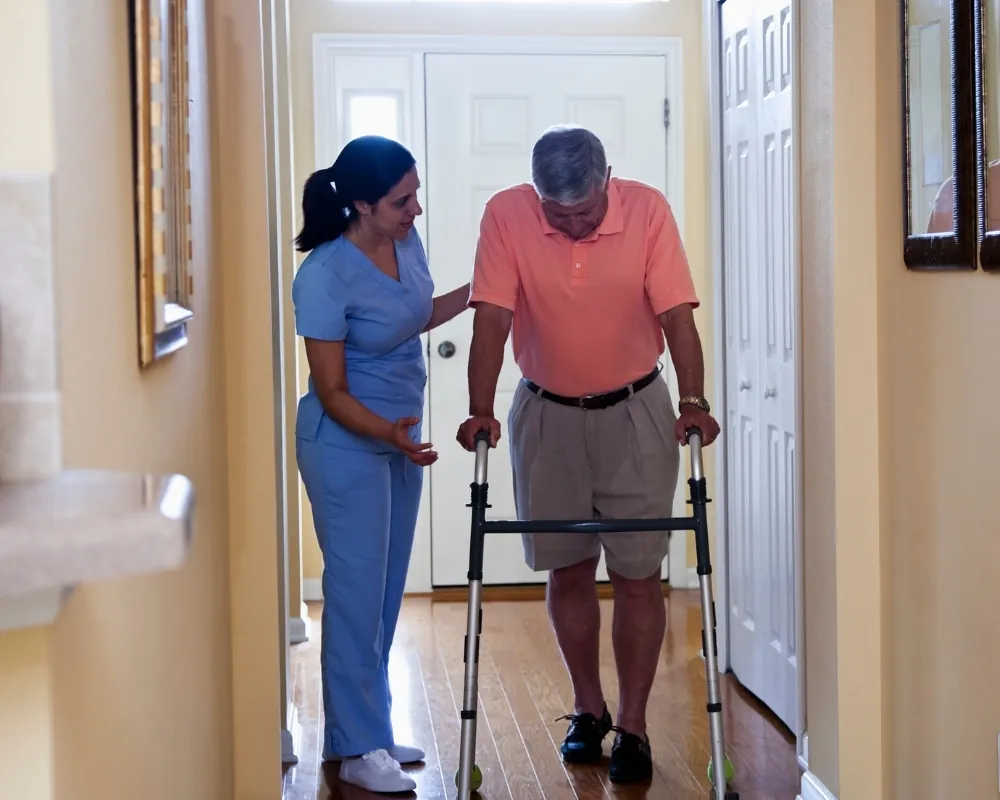
Caregiver helping senior man walk in hallway

How Advanced Nursing Coordinates Care During Stroke Recovery

Stroke recovery can involve many moving parts: physicians and neurologists, physical, occupational, and speech therapy, medications, follow-up appointments, home exercises, and family members trying to keep track of it all.

The challenge is ensuring what happens at home aligns with the plan providers put in place and that important changes don’t get lost between appointments.

Advanced Nursing & Home Care begins by looking at the whole situation:

  • How the stroke has affected the person’s movement, eating, communication, thinking, and mood
  • What physicians and therapists have instructed
  • Which tasks the person can still do independently
  • Where the daily routine is breaking down
  • What family members can realistically manage
  • Whether any needs require a licensed nurse
  • What changes the medical team has asked the family to report
  • When the person is alone

From there, we build the care plan around what needs to happen at home, who is responsible for each part of the plan, and what to communicate back to the family or medical team.

Authorized family members can also receive regular updates, so they have a clearer picture of how things are going at home and don’t have to piece it together from appointments, providers, and hurried phone calls.

Personal Care, Skilled Nursing, or Both After a Stroke?

Stroke recovery often does not fit neatly into one category. A person may be medically stable but need hands-on help with transfers, bathing, meals, mobility, supervision, and everyday routines. Another may manage those activities more independently but need a licensed nurse for medication administration, wound care, clinical monitoring, or another nursing need.

Some people need both.

Because Advanced Nursing & Home Care provides personal care and skilled nursing within one organization, support can be adjusted as recovery changes. Some families begin with more help after discharge and reduce it as independence returns; others add support as needs become clearer at home.

Caregiver helping senior man walk in hallway

How Advanced Nursing Coordinates Care During Stroke Recovery

Stroke recovery can involve many moving parts: physicians and neurologists, physical, occupational, and speech therapy, medications, follow-up appointments, home exercises, and family members trying to keep track of it all.

The challenge is ensuring what happens at home aligns with the plan providers put in place and that important changes don’t get lost between appointments.

Advanced Nursing & Home Care begins by looking at the whole situation:

  • How the stroke has affected the person’s movement, eating, communication, thinking, and mood
  • What physicians and therapists have instructed
  • Which tasks the person can still do independently
  • Where the daily routine is breaking down
  • What family members can realistically manage
  • Whether any needs require a licensed nurse
  • What changes the medical team has asked the family to report
  • When the person is alone

From there, we build the care plan around what needs to happen at home, who is responsible for each part of the plan, and what to communicate back to the family or medical team.

Authorized family members can also receive regular updates, so they have a clearer picture of how things are going at home and don’t have to piece it together from appointments, providers, and hurried phone calls.

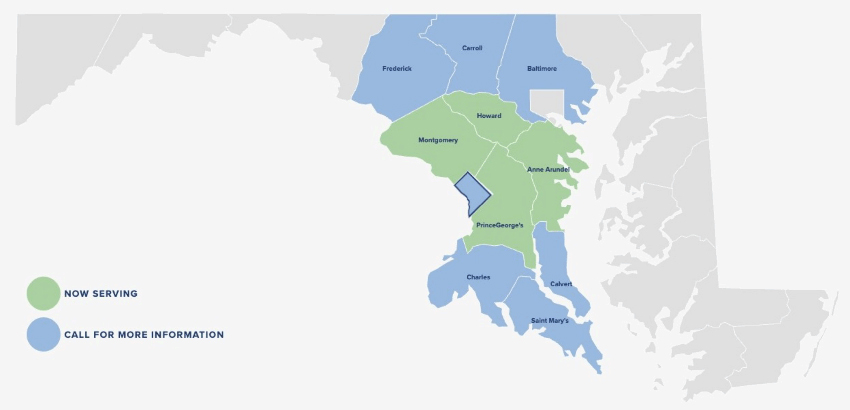
In-Home Stroke Recovery Care Throughout Montgomery County

Advanced Nursing & Home Care helps families arrange personal care and skilled nursing support after a hospital or rehabilitation stay throughout Montgomery County, Maryland.

The areas we serve include Bethesda, Chevy Chase, Gaithersburg, Potomac, Rockville, Silver Spring, and surrounding communities.

Help With Stroke Recovery at Home

When transfers, meals, medications, therapy exercises, and daily care become too much for your family to manage, you don’t have to solve the entire situation on your own.

Tell us what has changed at home. We will help you understand which needs may be supported by a care provider, which may require a licensed nurse, and what a realistic care plan could look like.

Putting the right support in place can make the transition home easier and help families establish a safer, more sustainable routine.

What Happens After
You Contact Us?

Call, and you’ll speak directly with a member of our care team — not a call center — who listens to what’s happening and what kind of help you’re looking for.

We assess your loved one’s medical needs, daily routine, and home safety. That’s what determines the right level of care — personal care, skilled nursing, or both.

Based on that plan, we match your loved one with a care provider or a licensed nurse suited to their specific needs and personality — never assigned at random.

Your care provider or nurse reviews the full care plan before their first visit, so nothing gets explained for the first time at your door.

Within 2–4 days of the first visit, our Client Satisfaction team checks in to confirm the care is the right fit and nothing has changed — then keeps checking in as needs do.

If your loved one’s needs change—a new diagnosis, a hospital stay, more hands-on help—your Staffing Coordinator adjusts the care plan rather than starting over.

Help With Stroke Recovery at Home

When transfers, meals, medications, therapy exercises, and daily care become too much for your family to manage, you don’t have to solve the entire situation on your own.

Tell us what has changed at home. We will help you understand which needs may be supported by a care provider, which may require a licensed nurse, and what a realistic care plan could look like.

Putting the right support in place can make the transition home easier and help families establish a safer, more sustainable routine.

What Happens
After You
Contact Us?

Call, and you’ll speak directly with a member of our care team — not a call center — who listens to what’s happening and what kind of help you’re looking for.

We assess your loved one’s medical needs, daily routine, and home safety. That’s what determines the right level of care — personal care, skilled nursing, or both.

Based on that plan, we match your loved one with a care provider or a licensed nurse suited to their specific needs and personality — never assigned at random.

Your care provider or nurse reviews the full care plan before their first visit, so nothing gets explained for the first time at your door.

Within 2–4 days of the first visit, our Client Satisfaction team checks in to confirm the care is the right fit and nothing has changed — then keeps checking in as needs do.

If your loved one’s needs change—a new diagnosis, a hospital stay, more hands-on help—your Staffing Coordinator adjusts the care plan rather than starting over.

What Families In Montgomery County Say.

The Right Care For Where Your Family Is Right Now.

Every family’s situation is different. Our services are designed to adapt as needs change.

Care coordinator helping senior man with paperwork

The Right Care For Where Your Family Is Right Now.

Every family’s situation is different. Our services are designed to adapt as needs change.

Specialized Care For Complex Conditions

Frequently Asked Questions

It depends on how the stroke affected the person. Many stroke survivors need help with transfers, bathing, dressing, and moving safely through the home. Others need support with meals and swallowing precautions, speech and communication, memory or mood changes, or fatigue. An assessment based on the discharge plan shows what’s needed.

Yes. A stroke survivor may need hands-on help with transfers, bathing, and meals while also needing a licensed nurse for medication administration, wound care, or clinical monitoring. Because Advanced Nursing & Home Care provides both within one organization, support can be adjusted as recovery changes.

Yes, as directed by the therapy team. A care provider can encourage home exercises and use the mobility and communication strategies that physical, occupational, and speech therapists recommend. Home care doesn’t replace therapy; it helps make the therapy plan easier to follow between visits.

Yes, by following the instructions your loved one’s speech-language pathologist or physician has set. A care provider can prepare meals with the prescribed food textures and liquid consistency, help with positioning and pacing, supervise eating and drinking, and report coughing or choking. The medical team makes decisions about swallowing precautions.

Before discharge, it helps to know who will help with bathing, toileting, and transfers; whether your loved one can be left alone; how medications will be managed; who will follow swallowing or diet instructions; how they’ll get to therapy; and what support is available at night. We can work from the discharge plan with you.

support after a hospital or rehab discharge >

Ready for Personal and Companion Care Services in Montgomery County, MD

Content Reviewed by Linda Lennon, BSN, RN, Director of Nursing at Advanced Nursing and Home Care